
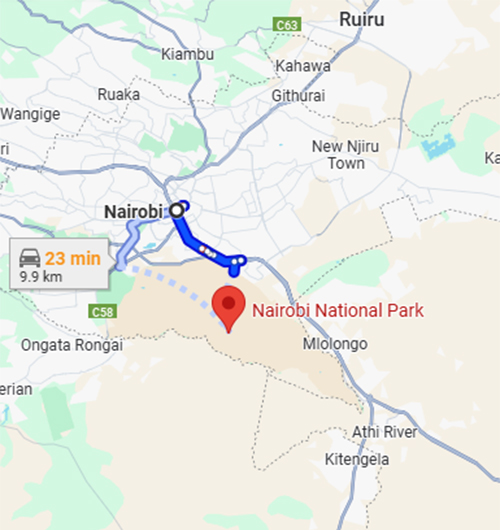
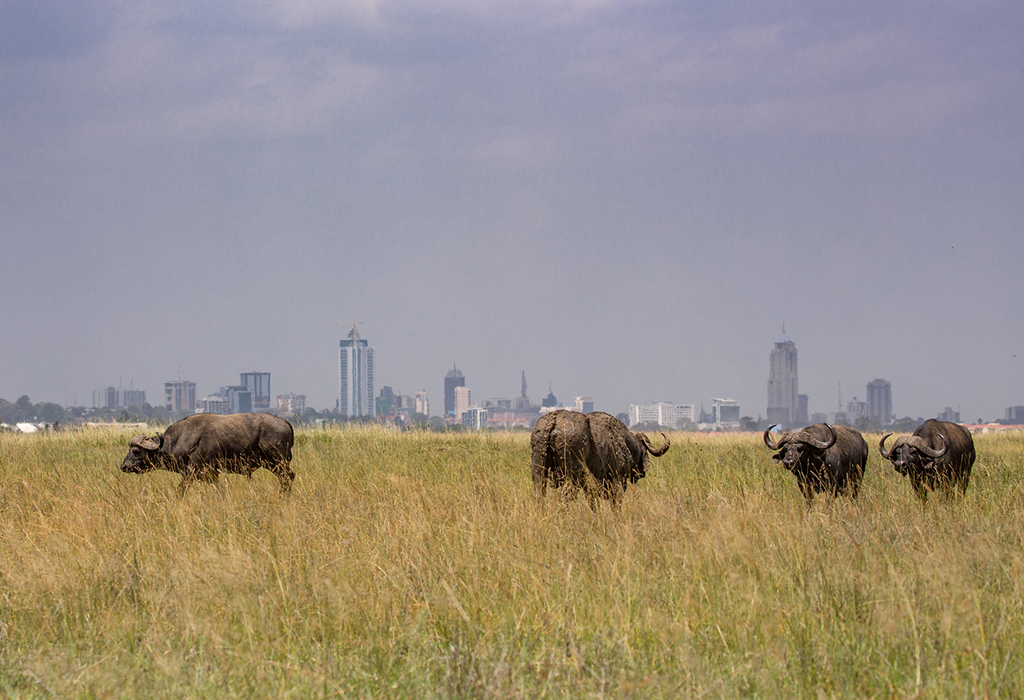
Nairobi National Park, known as “The World’s Only Wildlife Capital,” is just 7 kilometers from the city center. It is the only protected area with a vast range of wildlife close to a capital city. Established in 1946, it was the first national park in Kenya and East Africa. Covering 117 km² (45 square miles), the park sits at an elevation of 1,500–1,800 meters (5,000–6,000 feet) above sea level.
The park consists of savannah, highland forests, acacia woodlands, and riverine habitats, supporting diverse wildlife. It is home to endangered black rhinos, lions, leopards, cheetahs, hyenas, buffaloes, giraffes, and more. Over 400 bird species, both endemic and migratory, have been recorded. The park is also one of Kenya’s most successful rhinoceros sanctuaries. It is managed by the Kenya Wildlife Service (KWS), whose headquarters are at one of its main gates.
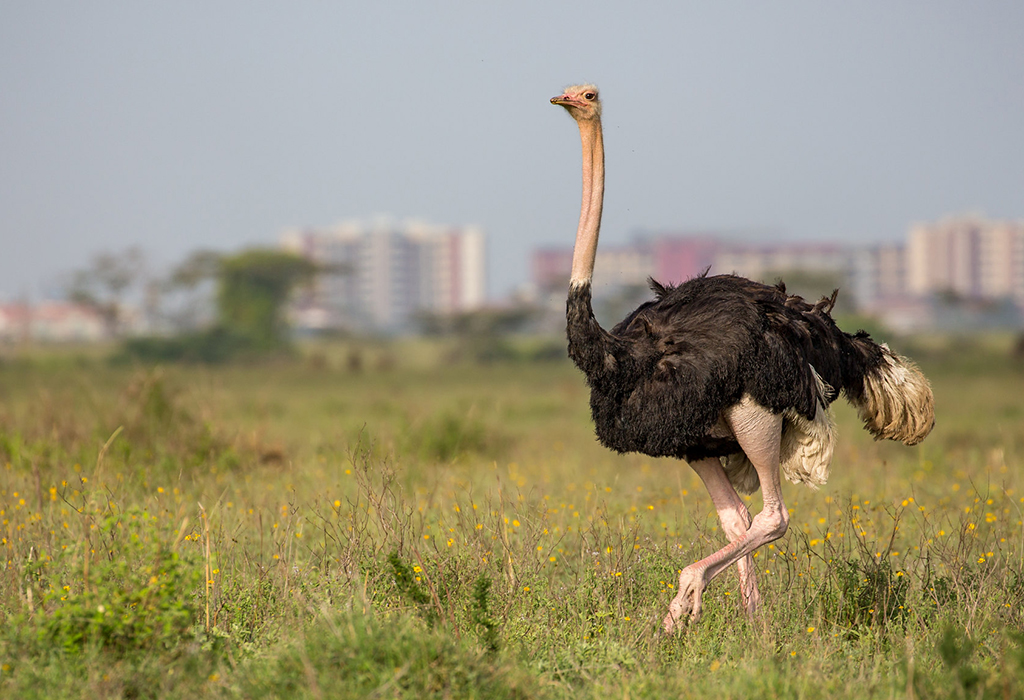
Common wildlife includes buffaloes, baboons, zebras, gazelles, cheetahs, hartebeests, hippos, leopards, lions, elands, impalas, giraffes, ostriches, and waterbucks. Near the main entrance, the David Sheldrick Trust runs an orphanage for elephant and rhino calves. Founded in 1963 by Daphne Sheldrick, it rehabilitates rescued animals before releasing them into protected areas.
Watch majestic lions as they prowl through the grasslands, witness leopards stealthily stalking their prey, and observe cheetahs sprinting across the plains. Giraffes gracefully browse treetops while zebras graze in large herds. Buffaloes move in powerful groups, and rhinos roam freely in protected areas. Elephants, warthogs, and antelopes add to the spectacle.
With over 400 species, the experience is truly remarkable. Look up to see majestic eagles soaring high, their sharp eyes scanning the ground. Spot ostriches striding across open plains, their long legs built for speed. Marvel at the regal crowned cranes, their golden feathers shimmering in the sunlight. From vibrant bee-eaters to melodious sunbirds, each sighting is a delight.